
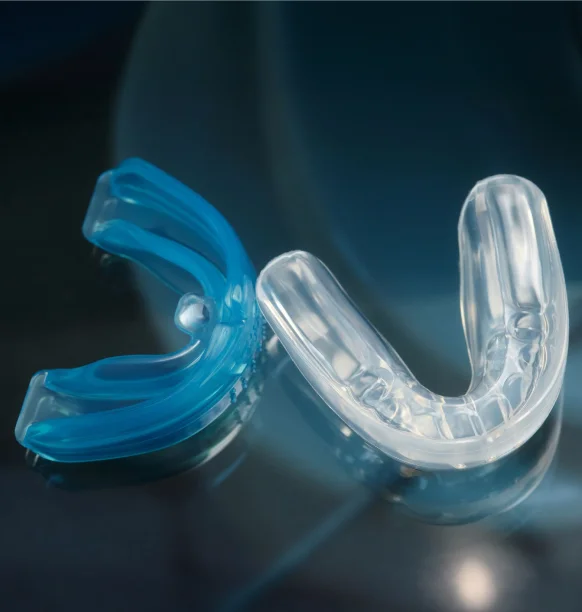
Protecting Teeth from the Hidden Damage of Grinding and Clenching
Nighttime teeth grinding and clenching, known clinically as bruxism, is a widespread problem, and most people don’t realize they’re doing it until symptoms appear. While they sleep, the forces generated by grinding and clenching can wear teeth down, crack and break them, strain the jaw joints, and even irritate the nerves inside the teeth.
At Gilreath Family Dentistry, our goal for patients who grind and clench is twofold. First, we break the cycle with a precisely designed custom night guard. Then, when needed, we restore any teeth that have already been damaged. Patients throughout Marietta and Cobb County rely on our doctors to protect their smiles and relieve the discomfort that grinding causes.
Schedule a Night Guard ConsultationSigns You May Be Grinding or Clenching Your Teeth
Because grinding usually happens during sleep, the signs often show up during the day. Common symptoms include:
- Worn, flattened, or shortened teeth
- Chipped, cracked, or broken teeth, especially the front teeth
- Increased tooth sensitivity
- Sore, tired or tight jaw muscles, especially in the morning
- Pain in or around the ear or the TMJ (jaw joint)
- Frequent headaches, including tension headaches and migraines
- A partner noticing grinding sounds at night
Patients experiencing any of these signs should schedule an evaluation with our Marietta office.
What Causes Teeth Grinding and Clenching?
Grinding and clenching can be triggered by a number of factors, and many patients have more than one. Common causes include:
- Stress and anxiety, one of the most common triggers
- Certain medications that can increase clenching or grinding
- Worn teeth that change how the teeth fit together
- An unstable bite that causes the jaw to search for a comfortable position
- Certain medical conditions, such as Parkinson’s disease and multiple sclerosis
- Weightlifting and strenuous exercise, which often involve forceful clenching
Grinding can also be associated with sleep-disordered breathing. When appropriate, our doctors will discuss whether a sleep evaluation is worthwhile.
How Bruxism Damages Teeth over Time
The constant pressure of grinding and clenching can cause significant damage if left untreated:
- Front teeth can wear and break, often requiring bonding or crowns to repair.
- Back teeth can become flat, which weakens them and leads to future problems that need restorations such as crowns.
- Nerves inside the teeth can become irritated, causing sensitivity or pain.
- Jaw joints and muscles can become strained, leading to TMJ discomfort and pain around the ears.
- Headaches, including migraines, can be triggered or worsened by nighttime clenching.
A custom night guard protects the teeth from these forces, helping prevent further damage and the more extensive dental work it can lead to.
How We Create a Precision-Fit Night Guard
Gilreath Family Dentistry makes night guards using the latest digital technology, with no messy impressions and no waiting on an outside lab. Here’s how it works:
Comprehensive Evaluation

One of our doctors examines the teeth, jaw joints, and bite, looking for wear patterns and other signs of grinding and clenching. We also discuss symptoms such as headaches or jaw pain.
Digital Scan
Instead of uncomfortable impression trays that can trigger gagging, we take a quick digital scan to create a precise 3D model of the teeth.
In-Office Digital Design and Fabrication
Our team designs and manufactures the night guard digitally, right in our Marietta office, for a precise, customized fit.
Fitting and Bite Adjustment
The patient tries on the finished night guard while our doctors check the fit and fine-tune the bite for comfort and proper jaw movement.
Follow-Up and Restoration Planning
Our team checks the night guard and the teeth at future visits. If any teeth have been damaged by grinding, our doctors discuss options to restore them.
Benefits of a Custom Night Guard from Gilreath Family Dentistry
- Protects teeth from wear and fractures: A durable barrier absorbs grinding forces so the natural teeth don’t have to.
- Relieves jaw strain: A properly designed guard helps the jaw muscles relax, easing morning soreness and tension.
- May reduce grinding-related headaches: Many patients notice fewer tension headaches once clenching forces are controlled.
- Protects existing dental work: Crowns, veneers, and fillings last longer when they aren’t exposed to grinding forces.
- Precise, comfortable fit: Digital design creates a guard that fits accurately and feels comfortable all night.
- Easy replacement: Because the design is saved digitally, a lost or broken night guard can be remade quickly.
Insurance and Payment Options for Night Guards
Many dental insurance plans include partial coverage for night guards, especially when grinding has caused documented wear or damage. Gilreath Family Dentistry accepts most insurance plans and files claims on behalf of our patients. Our team will review coverage before treatment begins. We also accept HSA and FSA funds and offer financing through CareCredit, subject to approval.
Financial PolicyStop Grinding Damage With a Custom Night Guard in Marietta
Worn teeth, sore jaws, and morning headaches don’t have to be part of everyday life. Contact Gilreath Family Dentistry at 200 White St NW, Marietta, GA 30060 in Marietta to schedule an evaluation and get a custom night guard designed to protect your smile.
Schedule an AppointmentFrequently Asked Questions
About Teeth Grinding and Night Guards
Many people don’t realize they grind their teeth until a dentist notices the signs or a partner hears it at night. Common signs include worn or flattened teeth, chipped teeth, jaw soreness in the morning, tooth sensitivity, and frequent headaches. Our doctors can identify grinding damage during a routine exam at our Marietta office.
Bruxism is the clinical term for grinding or clenching the teeth, most often during sleep. It can wear down and break teeth, strain the jaw joints and muscles, and contribute to headaches. A custom night guard is one of the most effective ways to protect the teeth from the damage it causes.
Yes. The intense muscle activity involved in grinding and clenching can lead to tension headaches and may contribute to migraines in some patients. Many patients notice fewer morning headaches after they begin wearing a properly designed custom night guard.
A custom night guard is made from a digital scan of the patient’s teeth and designed to specific standards: firm material, correct contact with the teeth and controlled jaw movements. Store-bought guards are often soft and generic, which can allow the jaw to keep clenching and may not protect the teeth properly.
With proper care, a custom night guard can last several years, though heavy grinders may wear through theirs sooner. Our team checks the night guard at regular dental visits. Because the design is stored digitally, a replacement can be made quickly if it wears out, breaks or gets lost.
A night guard can help relieve TMJ discomfort caused by grinding and clenching by reducing the strain on the jaw joints and muscles. Our doctors evaluate the jaw and bite to determine whether a night guard is the right treatment and design the appliance accordingly.
Rinse the night guard every morning and brush it gently with a soft toothbrush and cool water. Store it in its ventilated case and keep it away from heat, which can warp the material. Bring it to dental checkups so our team can inspect it for wear.
Many dental insurance plans offer partial coverage for night guards, particularly when grinding has caused wear or damage to the teeth. Gilreath Family Dentistry accepts most insurance plans and files claims for our patients. HSA, FSA and CareCredit financing are also available.