

Stopping Cavities Before They Need a Filling
At Gilreath Family Dentistry, our philosophy is simple: preserve as much natural tooth structure as possible. The smaller the cavity preparation, the more healthy tooth we save and the longer the restoration lasts. Better still is stopping decay before any tooth structure needs to be removed at all.
That’s the goal of no-drill cavity treatment. When small areas of decay are found early, our doctors can often treat them proactively, before they grow into cavities that need a traditional filling. Rather than waiting to see whether early decay gets worse, Gilreath Family Dentistry takes a conservative, proactive approach. This helps patients throughout Marietta and Cobb County keep their teeth stronger and healthier for longer.
Ask About No-Drill TreatmentHow Tooth Decay Develops and When It Can Be Stopped
Tooth decay travels from the outside of the tooth inward:
- Enamel: Decay begins in the enamel, the hard outer layer of the tooth. At this early stage, known as incipient decay, it can often be stopped without drilling.
- Dentin: If decay reaches the dentin, the softer middle layer, it spreads more quickly and typically needs to be removed and restored with a filling.
- Pulp: Left untreated, decay can eventually reach the nerve of the tooth, leading to pain, infection and more extensive treatment.
The key is catching decay while it’s still in the enamel. Stopping it at this layer keeps it from progressing into the dentin, where drilling and filling become necessary.
Advantages of Treating Early Cavities Without Drilling
- Preserves natural tooth structure: No healthy enamel is removed, keeping teeth as strong as possible.
- No needles or numbing: Most no-drill treatments are completely comfortable and require no anesthetic.
- Ideal for anxious patients: Patients who feel nervous about drilling can often avoid it entirely.
- Quick and simple: Treatments like fluoride varnish and silver diamine fluoride take just minutes during a routine visit.
- Prevents bigger problems: Stopping decay early helps avoid larger fillings, crowns and more costly treatment later.
- Great for all ages: No-drill options benefit young children, teens, adults and seniors alike.
Is No-Drill Cavity Treatment Right for You?
No-drill cavity treatment works best for patients who:
- Have small areas of decay that are still limited to the enamel
- Maintain excellent oral hygiene and are willing to put in a little extra effort at home
- Attend regular checkups so treated areas can be monitored
- Are young children who may not tolerate traditional fillings
- Are older adults or patients for whom limited treatment is preferred
- Feel anxious about drilling and want a more conservative approach
If decay has already reached the dentin, a tooth-colored filling is usually the best way to restore the tooth. Our doctors will recommend the right option after a thorough exam.
How Gilreath Family Dentistry Stops Early Decay Without a Drill
No-drill treatment is a partnership between our doctors and each patient. Here’s how the process works:
Early Detection

During a routine checkup, our doctors use a careful exam and low-dose digital X-rays to identify small areas of decay before they become cavities that need filling.
Personalized Recommendation
If the decay is limited to the enamel, our doctors explain the no-drill options available and discuss which approach best fits the patient’s needs, preferences and oral health.
In-Office Treatment
Treatments such as fluoride varnish or silver diamine fluoride are applied quickly and comfortably during the visit, with no drilling or numbing required.
At-Home Care Plan
Patients receive guidance on prescription fluoride toothpaste, xylitol products and daily hygiene habits that support the treatment.
Ongoing Monitoring
At every cleaning and exam, our team checks the treated areas to confirm the decay has stopped. If an area continues to progress, our doctors discuss restoring it with a conservative tooth-colored filling.
No-Drill Treatments We Use to Control Tooth Decay
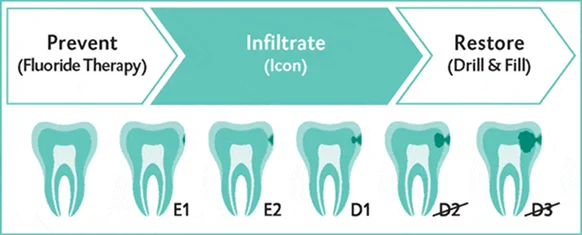
Our doctors use several proven approaches to manage small or incipient areas of decay.
- Prescription-Strength Fluoride Toothpaste – Fluoride remains one of the most effective ways to control tooth decay. Prescription-strength fluoride toothpaste delivers a higher concentration of fluoride than over-the-counter products, helping strengthen enamel and stop early decay at home.
- In-Office Fluoride Varnish – Applied during routine cleanings, fluoride varnish coats the teeth with concentrated fluoride that strengthens enamel and helps reverse early decay. It’s quick, comfortable and highly effective.
- Xylitol Products – Xylitol is a naturally occurring sugar found in plants that helps slow down or stop tooth decay by reducing cavity-causing bacteria. Gilreath Family Dentistry may recommend xylitol mints or gum as part of a no-drill treatment plan.
- Silver Diamine Fluoride (SDF) – Silver diamine fluoride (SDF) combines fluoride and silver to stop or slow cavities without drilling. The treated decay turns black, so SDF is often used for young children, adolescents, and older adults when limited treatment is preferred. Our doctors may also recommend it for other patients when appropriate and will always discuss the options with you.
Protect Your Natural Teeth With Conservative Care
Early decay doesn’t always mean drilling. Contact Gilreath Family Dentistry at 200 White St NW, Marietta, GA 30060 in Marietta to schedule an exam and learn whether no-drill cavity treatment is right for you. We accept most dental insurance plans, as well as HSA and FSA funds.
Schedule an AppointmentFrequently Asked Questions
About No Drill Cavity Treatment
Yes, in many cases. When tooth decay is caught early and is still limited to the enamel, it can often be stopped without drilling. Treatments like prescription-strength fluoride, fluoride varnish and silver diamine fluoride help strengthen enamel and halt the decay. Once decay reaches the dentin, a filling is usually needed.
Early decay in the enamel can sometimes be stopped or remineralized, but it rarely improves without help. Fluoride treatments, excellent oral hygiene and a low-sugar diet give the enamel the best chance to recover. Our doctors monitor treated areas at every visit to make sure the decay has stopped.
Silver diamine fluoride, or SDF, is a liquid treatment that combines fluoride with silver to stop active tooth decay without drilling. It is painted directly onto the cavity, where it helps halt or significantly slow the decay. The main drawback is that it permanently stains the treated decay black.
Yes. Silver diamine fluoride turns the decayed portion of the tooth black, though it does not stain healthy enamel. Because of this, Gilreath Family Dentistry typically uses SDF for young children, adolescents and older adults for whom limited treatment is the goal. We always discuss this with patients before treatment.
Silver diamine fluoride is widely used in children because it stops decay quickly and painlessly, without needles or drilling. It’s especially helpful for young children who may not be able to sit through a traditional filling. Our doctors explain the benefits and the staining effect so parents can make an informed decision.
Only a dental exam and X-rays can determine whether a cavity is small enough for no-drill treatment. At Gilreath Family Dentistry, our doctors evaluate how deep the decay has progressed and whether it is still confined to the enamel. They then recommend the most conservative option that will protect the tooth.
Our team checks treated areas at every cleaning and exam. If the decay continues to grow despite no-drill treatment, our doctors restore the tooth with a conservative tooth-colored filling. Catching progression early keeps the filling as small as possible and preserves more natural tooth structure.
Prescription-strength fluoride toothpaste contains a higher concentration of fluoride than standard over-the-counter toothpaste. That makes it more effective at strengthening enamel and stopping early decay. Our doctors often recommend it for patients at higher risk for cavities or with small areas of beginning decay.