
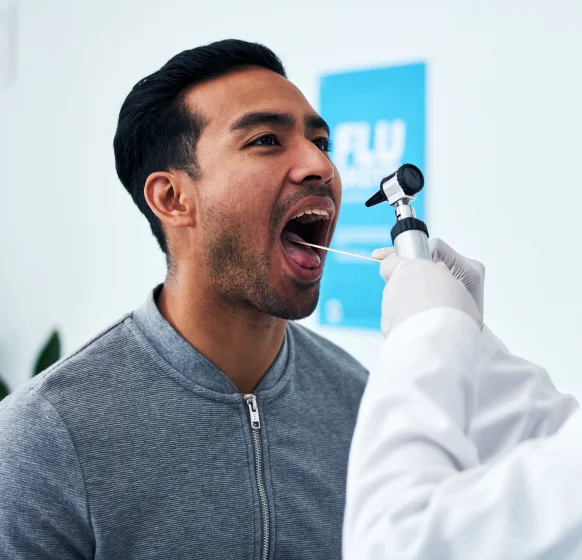
Early Detection Starts with a Simple, Painless Screening
Oral cancer can affect the lips, mouth, tongue, throat, and tonsils, and it’s being diagnosed in more Americans every year. When it’s caught early, survival rates are excellent. The challenge is that most oral cancers aren’t discovered until later stages, when treatment becomes far more difficult.
That’s why oral cancer screening is a standard part of care at Gilreath Family Dentistry. At every visit, our doctors and hygienists carefully evaluate the soft tissues of the mouth. We also recommend an advanced, light-based screening once a year, so that patients throughout Marietta and Cobb County have every opportunity for early detection.
Book an Oral Cancer ScreeningWhy Annual Oral Cancer Screenings Matter
Just like a Pap test or a PSA test, an annual oral cancer screening is a simple step that can make a life-saving difference:
- Finds changes before they’re visible: Advanced screening technology can reveal abnormal tissue before it can be seen with the naked eye.
- Improves treatment outcomes: Oral cancer detected in its earliest stages is far easier to treat successfully.
- Fast and comfortable: The advanced screening is completely painless, noninvasive, and takes just a couple of minutes.
- No dyes or stains: The technology uses a special light rather than rinses, dyes, or stains.
- Convenient: Screenings are completed during routine checkups at our Marietta office, with no separate trip needed.
- Peace of mind: A clear screening brings reassurance, especially for patients with known risk factors.
Who Is at Risk for Oral Cancer?
For many years, oral cancer was linked mostly to tobacco use. Today, the risk profile has changed significantly, and patients who don’t smoke are being diagnosed as well. Annual screening is especially important for patients with any of these risk factors:
- HPV exposure: The human papillomavirus (HPV) is now the primary cause of oral cancer in people younger than 50. HPV-16, the strain most closely linked to oral cancer, is also a leading cause of cervical cancer. It spreads through skin-to-skin and intimate contact, and millions of Americans carry the virus.
- Tobacco use: Smoking cigarettes, cigars or pipes and using chewing tobacco remain significant risk factors.
- Alcohol consumption: Regular alcohol use increases the risk of oral cancer, especially when combined with tobacco.
- Age: Risk increases with age, though HPV-related oral cancers often affect younger adults.
- Sun exposure: Prolonged sun exposure raises the risk of cancer on the lips.
Because so many people with oral cancer have no obvious risk factors, Gilreath Family Dentistry recommends annual screenings for all adult patients.
What to Expect During an Oral Cancer Exam at Our Marietta Office
An oral cancer screening at Gilreath Family Dentistry is quick, comfortable, and fully integrated into routine dental care. Here’s how it works:
Health and Lifestyle Review

Our team reviews the patient’s medical history, including any risk factors such as tobacco use, alcohol consumption, or recent changes noticed in the mouth.
Visual Examination
One of our doctors or hygienists carefully examines the lips, cheeks, gums, tongue, floor and roof of the mouth, and the back of the throat for any visible abnormalities.
Physical Examination
The doctor gently feels the jaw, neck, and areas inside the mouth to check for lumps, swelling, or unusual tissue.
Advanced Light Screening
During the annual advanced screening, a special light is used to reveal tissue changes that aren’t visible to the eye. This step takes just a couple of minutes and is completely painless.
Results and Next Steps
Our doctors share the results right away. If anything unusual is found, they explain the next steps clearly, which may include a follow-up visit to monitor the area or a referral for further evaluation.
Signs and Symptoms of Oral Cancer to Watch For
Between dental visits, patients should contact Gilreath Family Dentistry right away if they notice any of these changes in the mouth, lips, gums, cheeks, tongue, or throat:
- A sore or ulcer that doesn’t heal within two weeks
- New or unusual lumps, bumps or thickened areas
- Red, white or unusually colored patches
- Persistent hoarseness or a sore throat
- Difficulty chewing, swallowing or moving the tongue or jaw
- Numbness or pain in the mouth or lips without a clear cause
- A feeling that something is caught in the throat
Most of these changes turn out to be harmless, but any change that lasts longer than two weeks deserves a professional evaluation.

Advanced Light-Based Oral Cancer Screening Technology
Gilreath Family Dentistry uses advanced screening devices like VELscope and ViziLite, which use a special light to highlight abnormal tissue. Healthy and unhealthy tissue respond differently to the light. That allows our doctors to identify areas of concern before they are visible during a standard visual exam.
The screening is painless and noninvasive, uses no dyes or stains, and takes only a couple of minutes. It’s a simple addition to a routine checkup that provides a much more thorough look at oral health.
Protect Your Health With an Oral Cancer Screening
Early detection is one of the most powerful tools for fighting oral cancer. Contact Gilreath Family Dentistry at 200 White St NW in Marietta to schedule an oral cancer screening, or to have any unusual changes in the mouth evaluated. We’ll gladly check whether insurance covers the screening, and HSA and FSA funds can also be used.
Schedule a ScreeningFrequently Asked Questions
About Oral Cancer Screening
Gilreath Family Dentistry evaluates the oral tissues for signs of oral cancer at every dental visit. In addition, we recommend an advanced, light-based oral cancer screening once a year for adult patients. Patients with higher risk factors, such as tobacco use or HPV exposure, benefit most from consistent annual screenings.
No. An oral cancer screening is completely painless and noninvasive. The visual and physical exam involves only a gentle look and feel. The advanced screening uses a special light with no dyes, stains or rinses, and takes just a couple of minutes.
An oral cancer screening checks the lips, cheeks, gums, tongue, roof and floor of the mouth, and throat for sores, lumps, discolored patches or other abnormal tissue. Advanced light-based technology also helps reveal tissue changes that are not yet visible to the naked eye. Early identification allows for faster evaluation and treatment.
Yes. While tobacco remains a major risk factor, HPV is now the leading cause of oral cancer in people younger than 50. Alcohol use, age and sun exposure also increase risk. Because many patients with oral cancer have no traditional risk factors, Gilreath Family Dentistry recommends annual screenings for all adults.
Early signs of oral cancer include a sore that doesn’t heal within two weeks, red or white patches, lumps or thickened tissue, persistent hoarseness, and difficulty chewing or swallowing. Numbness in the mouth or lips can also be a warning sign. Anyone who notices these changes should schedule an evaluation with our Marietta office promptly.
VELscope is an advanced oral cancer screening device that uses a special blue light to help identify abnormal tissue in the mouth. Healthy tissue and abnormal tissue appear differently under the light, which helps our doctors spot concerns earlier. The screening is quick, comfortable and requires no dyes or stains.
Many dental and medical insurance plans cover oral cancer screenings, and HSA and FSA funds can also be used. Gilreath Family Dentistry is happy to check a patient’s coverage before the screening. We encourage annual screenings regardless of insurance reimbursement, because each patient’s health deserves care that isn’t limited by an insurance plan.
Finding an abnormal area doesn’t automatically mean cancer, since many tissue changes are harmless. Our doctors explain the findings clearly. They may recommend a follow-up visit to monitor the area or a referral for further evaluation, such as a biopsy. Acting quickly ensures any concern is addressed at the earliest possible stage.