
Braces for Teens and Adults in Marietta
Traditional braces remain one of the most effective orthodontic treatments available. Despite the popularity of clear aligners like Invisalign, braces continue to deliver excellent results for crooked, crowded, gapped, and misaligned smiles. Gilreath Family Dentistry places traditional braces for many teen patients and offers them alongside Invisalign. That way, every patient can choose the treatment that best fits their needs.
As a family practice that cares for patients from age 3 through adulthood, Gilreath Family Dentistry helps parents and patients weigh the options and choose the right orthodontic path with confidence.
Schedule a Free Braces ConsultationHow Traditional Braces Work
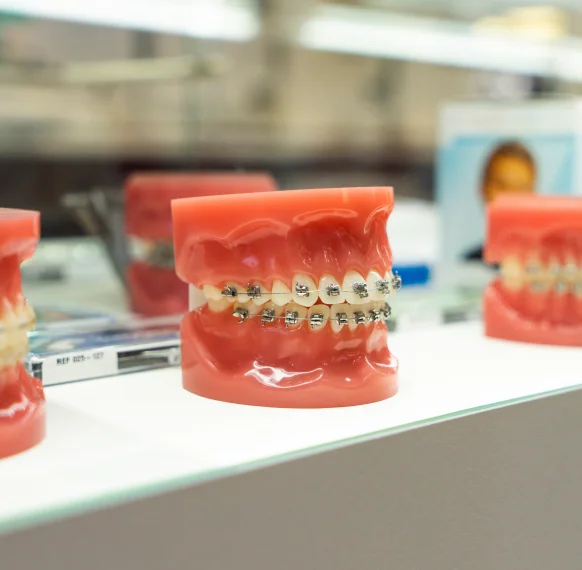
Traditional braces use small brackets bonded to the front of the teeth, connected by an archwire and secured with bands. Throughout treatment, the wires are adjusted at regular appointments. This applies steady, controlled pressure that gradually shifts the teeth and bite into proper alignment.
Braces can correct a wide range of orthodontic concerns, including:
- Crowded and crooked teeth
- Gaps and spaces between teeth
- Overbites, underbites and crossbites
- Complex tooth rotations and bite discrepancies
When Are Traditional Braces the Right Choice?
Most patients can choose either braces or Invisalign and achieve the same results. However, some patients are better suited to traditional braces:
- Patients who may not wear aligners consistently: Invisalign aligners must be worn at least 20 hours per day to work properly. Teens or adults who may be tempted to leave aligners out often do better with braces, which can’t be removed.
- Certain complex cases: Some uncommon, complex orthodontic issues are best treated with fixed braces.
- Patient or parent preference: Some families simply prefer the reliability of a fixed appliance.
Braces and Invisalign are comparable in cost and treatment time. The decision usually comes down to which option will be more comfortable and effective for each patient. Our doctors evaluate every case and recommend the approach that will deliver the best long-term result.
Things to Consider with Traditional Braces
Braces are highly effective, but there are a few lifestyle factors to keep in mind:
- Appearance: Metal brackets and wires are visible. Even tooth colored options tend to be noticeable.
- Food restrictions: Hard, sticky, and chewy foods should be avoided to prevent damage to brackets and wires.
- Comfort: Brackets and wires can rub against the lips and cheeks, especially in the first few weeks and after adjustments.
- Oral hygiene: Brushing and flossing around brackets takes extra time and care. This helps prevent decay and the white spots that can appear around brackets.
Patients who develop white spots after braces can have them treated at our office with no drilling and no anesthesia.
Schedule a FREE Braces Consultation in Marietta
Not sure whether braces or Invisalign is the better fit? Contact Gilreath Family Dentistry at 200 White St NW in Marietta for a FREE, no-obligation orthodontic consultation. Our doctors will help you choose the right treatment for you or your teen.
Book a Free ConsultationFrequently Asked Questions
About Traditional Braces
Treatment time with traditional braces varies based on the complexity of each case, the patient’s age and how well care instructions are followed. Braces and Invisalign are comparable in treatment time for most patients. At a FREE consultation, our doctors provide a personalized estimate of how long treatment will take.
Braces are not painful to place, but patients often feel some soreness for a few days after braces go on and after wire adjustments. Brackets and wires can also rub against the lips and cheeks at first. Over-the-counter pain relievers and orthodontic wax help keep patients comfortable while they adjust.
The cost of traditional braces depends on the complexity of the case and the length of treatment. At Gilreath Family Dentistry, braces and Invisalign are comparable in cost. Many dental insurance plans with orthodontic benefits help cover braces, and HSA and FSA funds can be applied toward treatment.
Both braces and Invisalign deliver excellent results for most teens. Invisalign Teen offers a discreet, removable option. Braces may be the better choice for teens who might not wear aligners consistently, or for certain complex cases. Our doctors evaluate each teen and help parents choose the option most likely to succeed.
Patients with braces should avoid hard, sticky and chewy foods, such as popcorn, nuts, hard candy, caramel, gum and ice. These foods can break brackets or bend wires, which can delay treatment. Cutting foods like apples and corn on the cob into smaller pieces also helps protect braces.
Tooth colored brackets are an option for patients who want braces that blend in more than traditional metal. They are less noticeable than metal braces, though they are still more visible than clear aligners. For a virtually invisible option, many patients choose Invisalign instead.
Brushing after every meal and flossing daily is essential with braces, since food and plaque collect easily around brackets and wires. Floss threaders, interdental brushes and water flossers make cleaning easier. Regular checkups and cleanings at Gilreath Family Dentistry help keep teeth and gums healthy throughout treatment.
Yes. A retainer is essential after braces to keep teeth from shifting back toward their original position. Our doctors recommend the right retainer for each patient, either a clear removable retainer worn at night or a fixed retainer bonded behind the lower front teeth.